
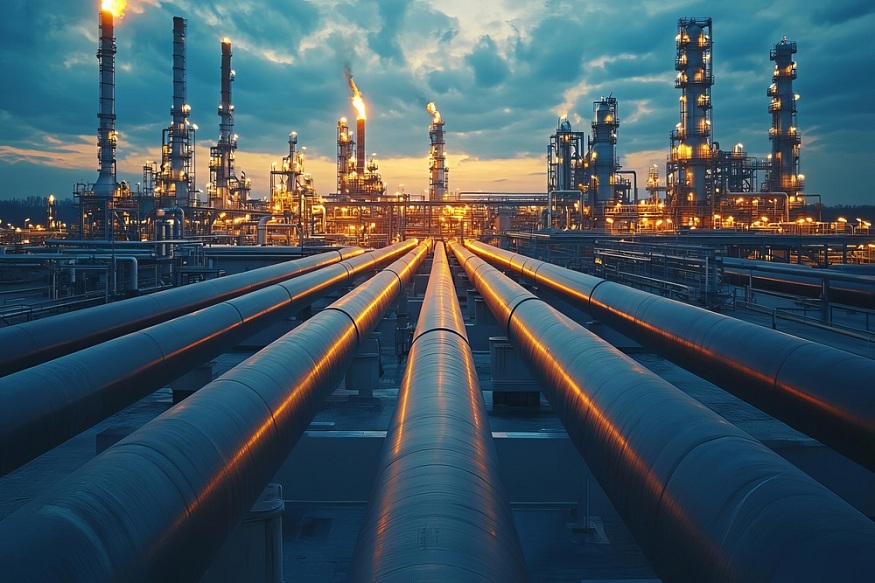
Few consider the process of separating gasoline from crude oil or how clean water is obtained from polluted sources. Yet chemical separation drives modern industry. These techniques are used to divide complex mixtures into useful elements for fuels, pharmaceuticals, plastics, and many other products.
The Basic Challenge of Separation
Raw materials come mixed up. Petroleum straight from underground contains hundreds of compounds jumbled together. Plants produce valuable chemicals buried in cellular material. Air itself needs splitting into nitrogen, oxygen, and other gases for various uses. Separation turns chaos into order. These processes separate complex mixtures into usable parts. Separating chemicals becomes simpler when their boiling points differ. For instance, one boils at 100 degrees, and the other at 200. However, many chemicals exhibit very similar properties. This necessitates innovative methods for their separation.
Mistakes cost money. Contaminated products fail and damage equipment. Valuable chemicals thrown away with waste hurt profits. Inefficient separation burns excess fuel and time. Plants that run tight, efficient separation beat competitors stuck with sloppy processes every single time.
Modern Separation Technologies
Distillation still dominates industrial separation despite being centuries old. Heat vaporizes liquids based on boiling points, letting them separate naturally. Today’s models differ significantly from past ones. Vacuum chambers reduce pressure, allowing sensitive chemicals to vaporize before they break down. Towers containing dozens of separation stages pull apart substances with boiling points just degrees apart. Computers adjust conditions instantly, squeezing out maximum purity.
Extraction skips the heat entirely. Each chemical has a specific solvent it favors. Oil readily mixes with hexane but not water, and salt prefers water over hexane. Introducing the correct solvent to a mixture allows it to selectively capture certain compounds. It does so while leaving others undisturbed. Food producers extract flavors this way. Drug makers pull medicine from plants. No cooking required.
Read More: Utah Asphalt Contractor Solutions for Residential and Commercial Needs
Purity grows with each crystal formed. Allow a hot solution to cool gradually and observe the formation of crystals. The crystals contain pure chemicals while impurities stay dissolved in the liquid. Filter out those crystals, and you have separation with no fancy equipment. Sugar refineries and drug companies rely heavily on this simple but effective method.
The Role of Advanced Materials
Hydrocarbon solvents manufacturers like Trecora supply specialized chemicals that enable industries to extract and purify materials with impressive selectivity and reduced waste. Their specially designed solvents are used for various separation processes, from extracting oils from seeds to isolating pharmaceutical compounds.
Membrane technology changed what’s possible in separation. These sheets contain billions of tiny holes that discriminate between molecules by size and chemistry. Push a mixture through and small molecules zip through while big ones get stuck. Other membranes grab specific chemicals based on electrical charge or chemical attraction. No moving parts. No energy for heating. Just passive filtration that runs continuously.
Read More: How ReflexEquip Hand Truck Trolleys Simplify Heavy Lifting
Molecular sieves work like bouncers at a molecular nightclub. Their internal structure contains cavities exactly sized for target molecules. Wrong-sized molecules can’t fit inside and flow past. Right-sized ones get trapped temporarily, separating from the stream. Release them later by changing temperature or pressure. These materials dry industrial gases, clean up chemical reactions, and handle separations too delicate for other methods.
Conclusion
Separation processes rarely get attention, yet they make modern products possible. That medicine bottle contains pure compounds because separation removed dangerous impurities. Cars run on fuel separated from thick, useless tar. Even breakfast juice went through separation to remove pulp and concentrate flavor. Behind every pure chemical sits a separation process that pulled it from nature’s mixed-up original. As technology advances, separation gets cleaner, faster, and more precise. Tomorrow’s breakthroughs in materials and medicine will depend on separation methods we’re only beginning to develop today.